Start with the way you wear your hair
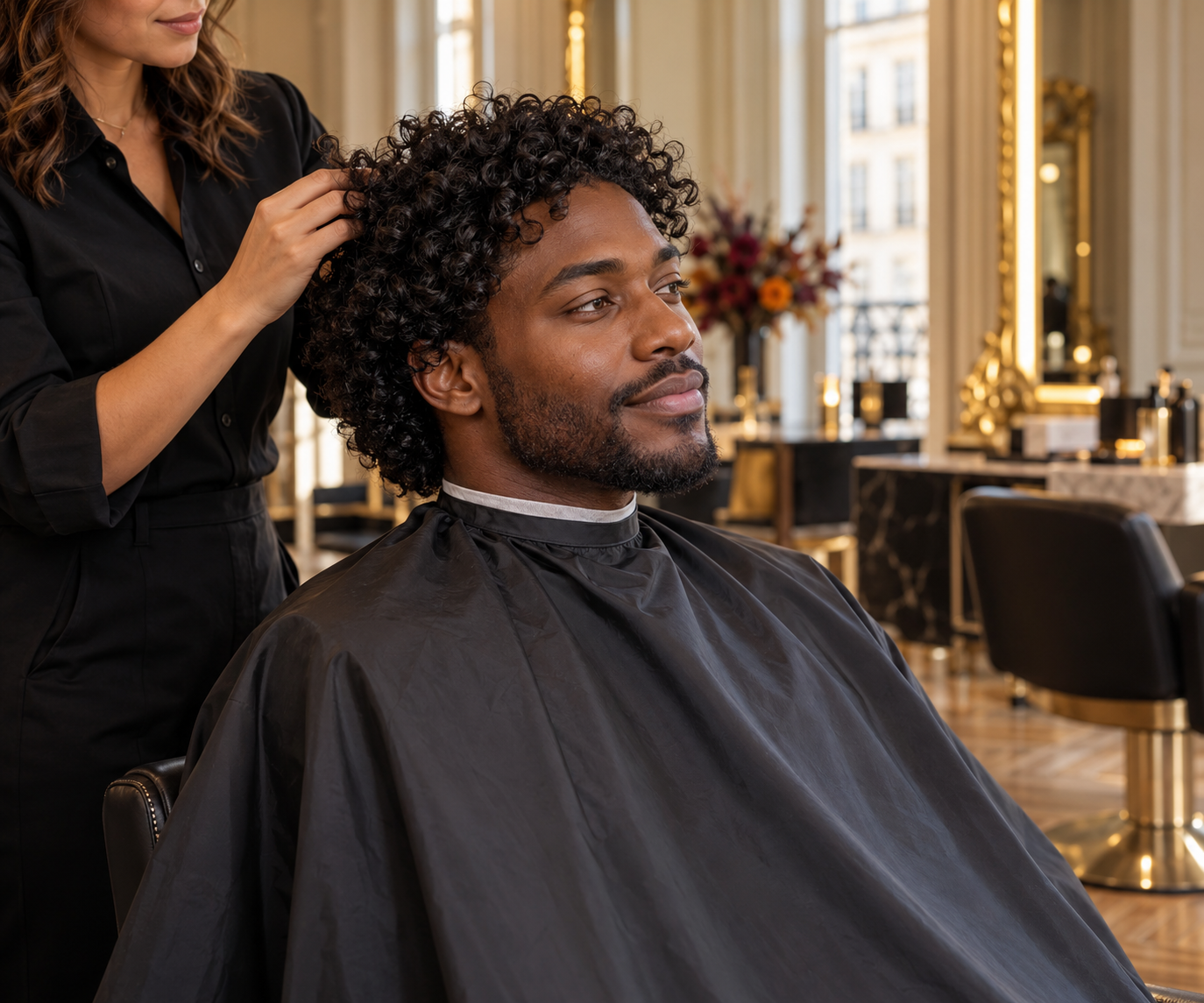
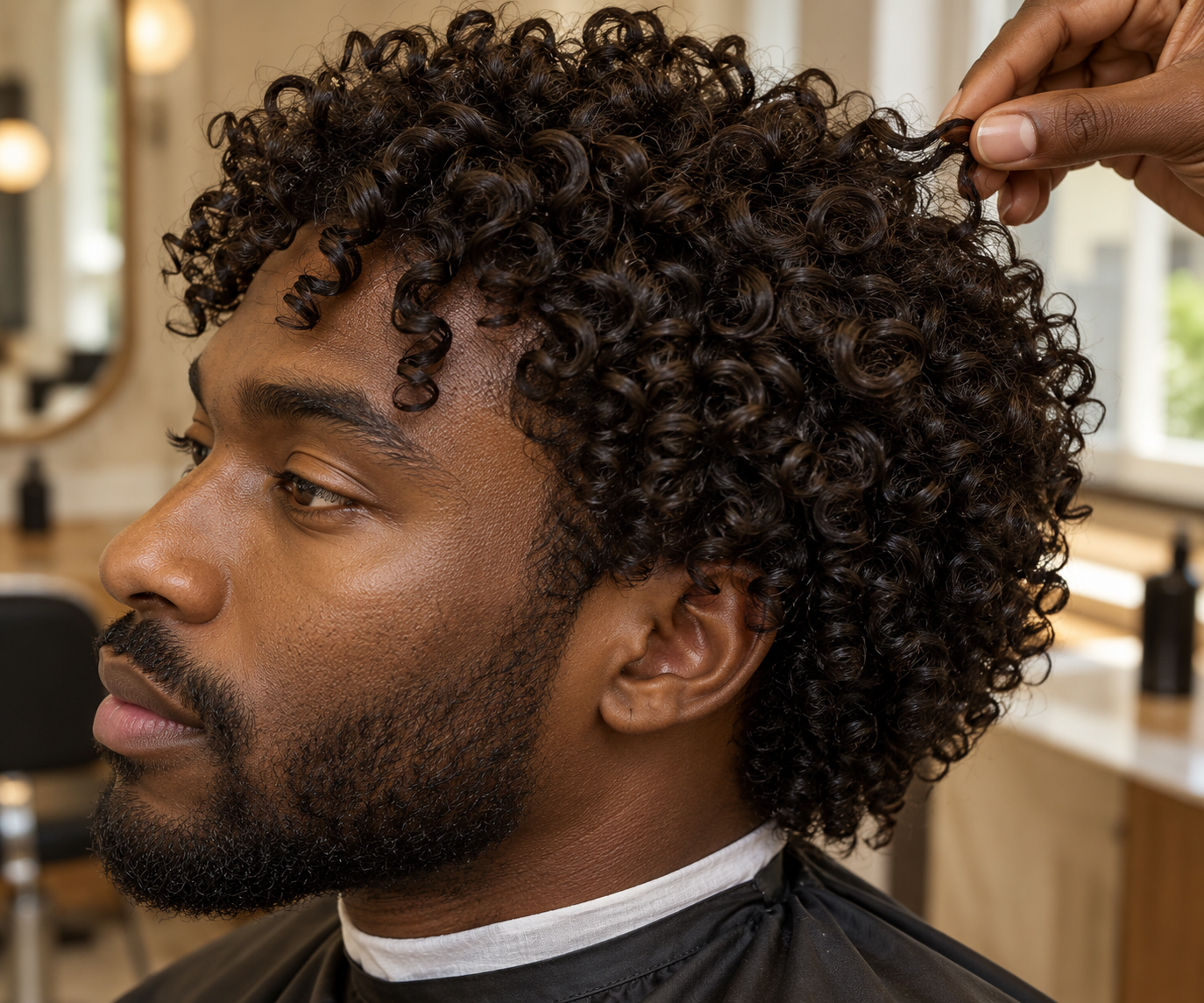
For a Halloween masquerade, a polished outline can feel dressed up without a costume or elaborate accessory. The best holiday cut is one that still feels like you the next day. Before discussing scissors, tell your stylist how your hair fits into an ordinary week: how long you spend drying it, which products you enjoy, how often you visit the salon, and what length you are not ready to lose. Kofi’s 3C curls have lively definition when they keep their natural spring and grouping. That makes the dry shape more useful to discuss than wet length alone. Bring two or three reference photos that show different details: the outline, the volume on top, and the length near the temples. Explain what you like in each. A photo cannot promise the same result; it helps you describe movement, density, and the upkeep you want. Before the appointment begins, ask your stylist to repeat the plan in plain language.
“Aesthetic harmony is never about concealment—it is the deliberate orchestration of angles, curves, and light to honor your natural balance.”
Shape curls while keeping their spring
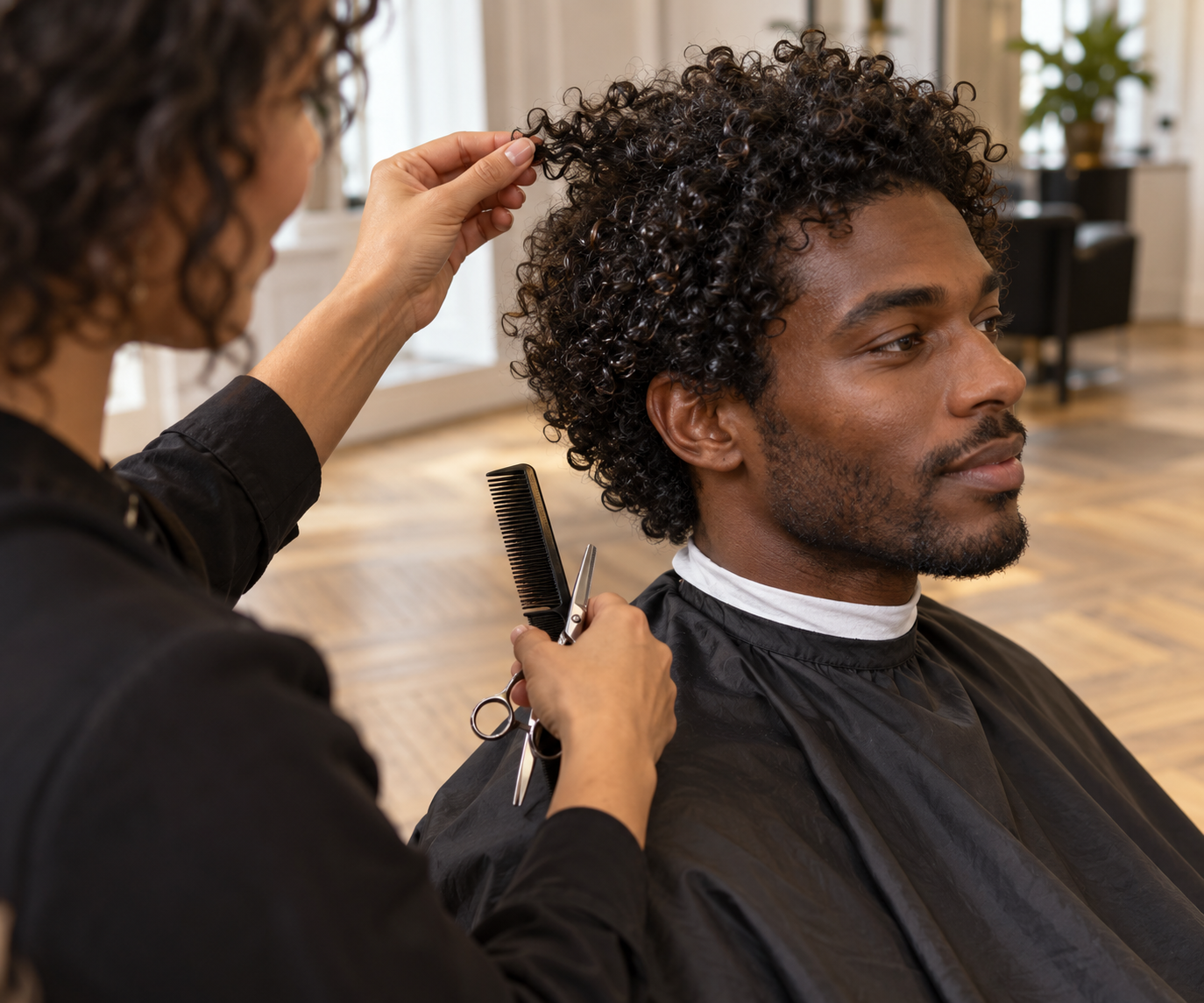
With tight curls, a small change in length can alter the overall outline. A stylist may work on dry or nearly dry hair, following the way each curl naturally forms, then check that both sides feel balanced. The aim is not to remove volume everywhere. It is to place lightness where it helps the shape settle while keeping enough weight at the ends for curls to stay defined. Ask for a careful first pass, then look at the outline standing and seated. If you like cleaner sides, say how far you want the hair shortened around the ears and temples. If you prefer a softer edge, ask to keep a gradual transition. “Fade” can mean different things to different people, so a concrete request helps: “Keep the top full, tidy the area around my ears, and check the length again when my curls are dry.”
Discuss shine without changing your look
Seasonal color can be subtle. A gloss adds tone and shine; it should not be presented as a guaranteed transformation or a correction for your complexion. On naturally dark hair, a colorist can compare a mocha tone, a soft champagne reflection, or a cooler option on a test strand. Violet may help soften unwanted yellow in some lightened bases, but it is not a one-size-fits-all formula for dark hair. Describe what you hope to see in daylight and what you would rather avoid. Ask what level and tone the colorist plans to use, whether it lifts or only deposits color, how long it may last, and what care will help maintain the finish. If you have reacted to hair color before, mention it before the appointment and follow the salon’s testing guidance. A cautious formula chosen with you is better than a vague promise of perfect shine.
Words to take into the salon
You can show your stylist these words: “I want to keep a comfortable length and a shape that works with my natural curls. Let’s look at the volume when my hair is dry before deciding how much to remove. I’d like a neat finish around my ears, but a soft transition, without taking too much from my temples. For color, could we compare mocha, champagne, and a cooler option on a small strand? I’d like to keep my base color and decide after seeing it in daylight.” Then ask, “Can you show me where you plan to cut and explain how it will change my styling?” If the plan is not what you had in mind, say so before the first cut. A good consultation gives you time to ask questions, see the lengths, and choose. For home care, ask for a simple routine: a cleanser suited to your scalp, conditioner that makes detangling easier, and a light product worked through damp lengths. The best result is one you can enjoy and recreate at home. Before you approve the finish, ask to see the shape from a few angles and check that both sides work with your natural hairline. If the outline feels too compact, discuss moving a little weight before asking for more length to be removed. With curls, dry gently and avoid handling them constantly; once fully dry, separate them only if you prefer a softer, airier finish. Keep expectations realistic: weather, routine, and texture all influence the result. You may also ask for a final photo of the outline so you can describe the same intention at your next visit. The conversation can continue until you feel comfortable with both the length and the upkeep. Before leaving the chair, do one last practical check: ask how to refresh the outline between visits, whether the curls should be reshaped with fingers or simply misted, and how much product is enough. Write down the color tones discussed and the appointment date. Those details make the next consultation easier, even if you visit a different salon. For the evening, choose a finish you can wear without constant adjustment; confidence often comes from a familiar style that fits your routine.
Aesthetic Q&A & Stylist Guidance
How do I ask for a cut that respects 3C curls?
Ask to see the shape on dry hair, with curls in their natural position. Explain the length you want to keep and ask for gradual, curl-by-curl shaping instead of uniform thinning.
How should I choose a gloss for dark hair?
Decide whether you prefer a warmer, more neutral, or cooler reflection. Ask the colorist to compare the formula in daylight and test it on a small section before applying it throughout.
What if I do not know salon haircut terms?
Describe the everyday result you want: volume, length to keep, styling time, and the outline you like. Front, side, and back photos can make the request easier to understand.