

A frame that still feels like you
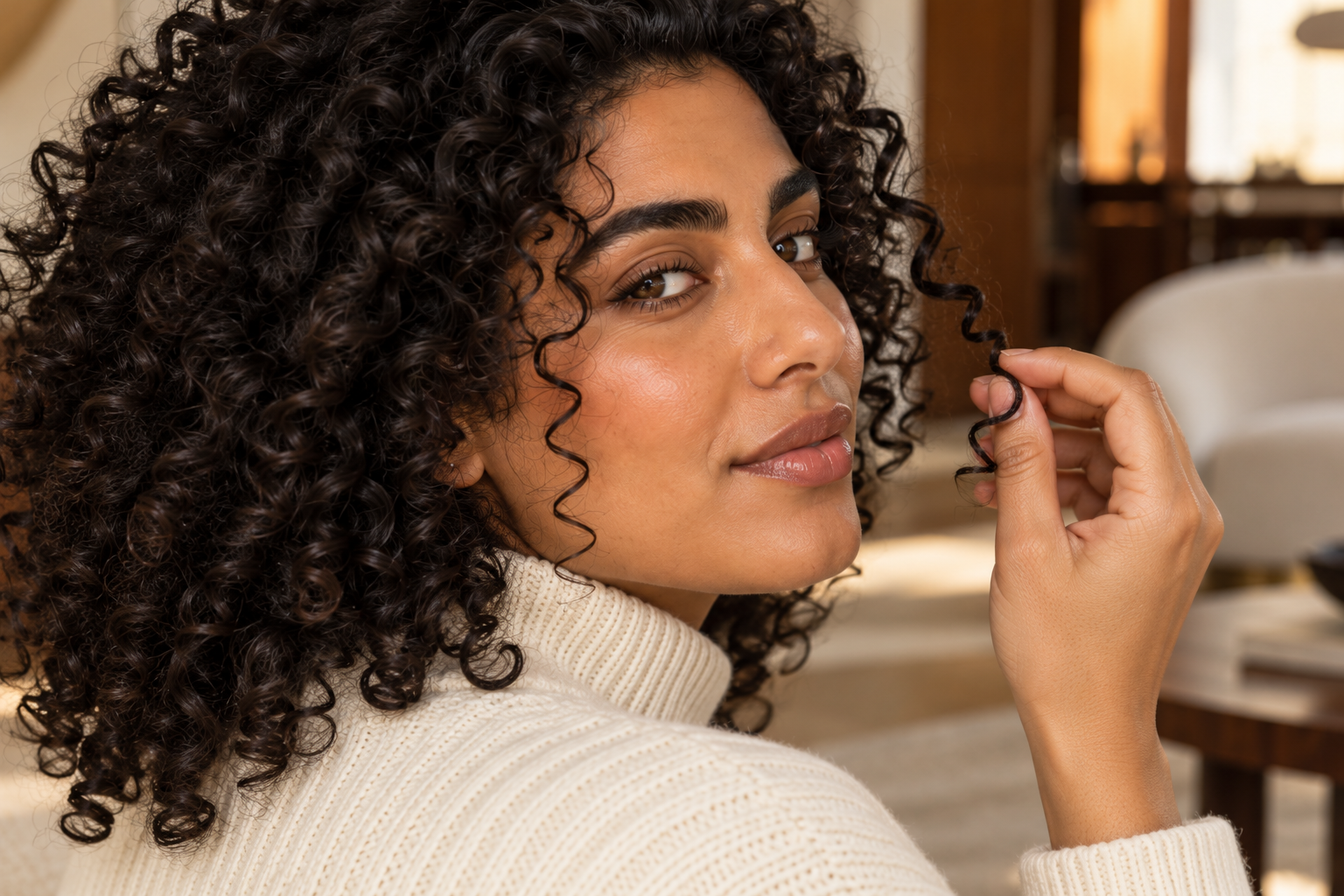
Face-framing layers should not make you feel like a different person. Zephyr’s cut begins with what is already there: dense 3C curls that gather around the cheeks and visibly spring up as they dry. The shortest pieces are best chosen while the curls sit in their natural dry shape. Starting near the cheekbones can open the face; a longer piece near the jaw feels quieter and is easier to pin back. The right choice is not about correcting a face shape. It is about the effect Zephyr wants: definition and movement without losing a familiar silhouette. A few front curls can be shaped and blended into the rest of the hair, creating a soft transition rather than a disconnected fringe. The overall length and fullness stay intact, while the curls around the face have room to move. Bring a photo of your own curls on an ordinary day; it gives the stylist a more useful reference than a picture with a very different texture. A good cut should feel recognizable from more than one angle. Zephyr can check the side view as well as the front, noticing how shorter curls blend into the overall length.
“Aesthetic harmony is never about concealment—it is the deliberate orchestration of angles, curves, and light to honor your natural balance.”
Read curls while they are dry
Tight curls can look longer when wet and spring back by different amounts as they dry. Ask your stylist to look at Zephyr’s hair in its natural dry state and agree on the finished length before cutting. A curl-by-curl approach with small scissors can keep the outline clear without thinning the hair heavily. A few deliberate layers at the temples and cheeks help the shape feel light; the outer edge can remain full. The shortest piece should end where Zephyr wants to wear it, not at a standard marker chosen for everyone. On dense hair, a stylist can carefully redistribute some interior weight while protecting the visible perimeter. Ask to pause and check the natural fall after each small section. That simple rhythm helps avoid unexpectedly short pieces and keeps the curls springy. If the hair is cut wet for another reason, ask for a dry check before the appointment ends, so the real curl length is clear. At a first appointment, it is fine to begin conservatively and remove a little more later. Scissors give more control than aggressive thinning, which can split curl clumps apart.

Shape the front in five minutes
Zephyr does not need a complicated morning routine. Refresh the front pieces with damp hands, then smooth a small amount of a familiar leave-in between the palms and press it upward into the curls, working from the ends. Avoid combing through dry curls; separating the clumps can create extra frizz. Let the hair part where it naturally falls, then guide a few individual curls around the cheek with your fingers. If there is time, use a diffuser on low heat and low airflow, keeping hands away while the curls set. Finish with a cool setting if available. A tiny amount of light serum on the fingertips can smooth dry ends without weighing down the roots. The aim is not a fixed, perfect result. A little movement and a curl or two that shifts through the day look relaxed and feel more comfortable. If the front dries flat, lift gently at the roots rather than adding more product. A quick refresh works best when only the front pieces look dry or flattened. Leaving the rest alone saves time and protects its natural shape.
Make the shape work for your day
A good frame can be worn loose or pinned back. For a more defined look, Zephyr can guide the front curls outward; for a quieter outline, a simple clip can keep them away from the face. The shortest pieces need enough length to stay secured when the rest is tied back. At the appointment, show both versions: the preferred everyday shape and a moment when the hair needs to be out of the way. That helps the stylist choose a practical shortest point. A center part can feel balanced, while a side part may keep more fullness on one side. Neither option is a rule. The cut is a flexible line that supports Zephyr’s expression and can change with clothing, mood, or plans. Ask the stylist to check how the front sits with the part you usually wear, then try a second part before the final check. Small adjustments can make the shape feel more personal. For an easy change, Zephyr can secure one or two curls with a small clip and leave the rest loose. The face-framing line stays visible without pulling all the hair back.
Words for the salon, care between visits
Zephyr can say: “Please cut my curls dry, in their natural shape. I would like soft pieces starting around cheek level that blend into my length. Please keep the ends full, avoid heavy thinning, and show me the shortest piece before you continue.” A photo of your own curls after drying is useful, even if it is not a polished portrait. Between visits, refresh gently and detangle only when the hair is wet and conditioned, using fingers or a suitable wide-tooth comb. The timing of a trim depends on how defined you like the outline; there is no need to follow a rigid calendar. If the front still falls and shapes easily, the next appointment can wait. Comfort matters too: ask for a pause, a mirror check, or a change of direction whenever you need one. A haircut should make daily life feel more like yours. A good consultation leaves room for personal preferences. Zephyr can check the shape as it develops, ask for a mirror, and request a small adjustment at any point.
Aesthetic Q&A & Stylist Guidance
What face-framing length works with 3C curls?
It depends on where you want movement. Cheek-length pieces feel expressive, while a piece near the jaw falls more softly. Choose the length when curls are dry and natural, since they spring up as they dry.
Can I still pin the front pieces back?
Yes. Ask to keep the shortest curl long enough to secure with a small clip, and show your stylist how you usually tie your hair back.
What should I ask for at the salon?
Ask for a dry curl-by-curl cut, soft blended front layers, and a full outline. Confirm the shortest length before cutting further, and ask the stylist not to thin out your curl clumps.